


Long-survivors cancer patients are progressively increasing throughout the western world, thanks to the improvement in diagnosis and the increasingly effective therapeutic tools. This population includes two groups of patients: those who have not relapsed for over 5 years and who can be considered “cured” and those who live over 5 years, but with a “chronic” disease that has various recurrences and needs intermittent care.
For these patients it is essential to identify personalized follow-up and management paths that take into account, in addition to the oncological problem, the new emerging pathologies and the psychological problems connected to the diagnosis and the therapies.

Also, the lengthening of life span of population (Italy is in second place in the world after Japan) increases the problems of diagnosing tumours in old patients because, usually, they have other pathologies that could hide the lymphoma. Moreover, the polypharmacy (simultaneous intake of more drugs) does not help the diagnosis.
The Haematology of the IRCCS Istituto Tumori Giovanni Paolo II (Cancer Institute Giovanni Paolo II) of Bari shared useful information material for patients with FIL. It is possible to consult the Manual of physical activity for patients with Lymphoma (download it , only in Italian language, by clicking here) developed as part of a best-practice project, funded by the Ministry of Health in 2014 entitled: “Development of a new model of disease prevention related to anti-tumour treatments in long-surviving patients with lymphoma “.
CONSULT OR DOWNLOAD THE MANUAL (Italian Language)· CLICK ON THE COVER >>

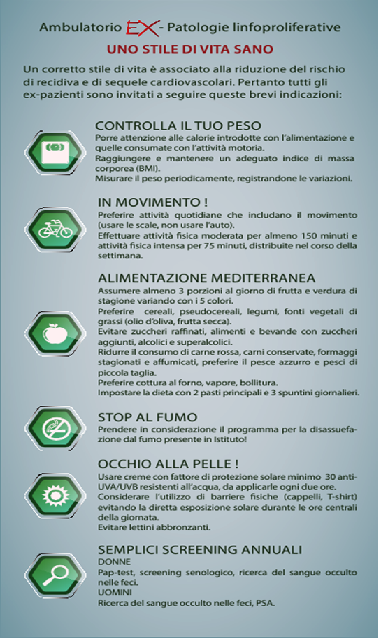
We also thank the Haematology of the IRCCS Istituto Tumori Giovanni Paolo II of Bari for the ruler with further useful advices for ex-patients:

The goals of long-survival Commission are:
- Approve the study proposals for patients with clinically cured forms (in complete remission for over 5 years), especially in relation to the prevention / early diagnosis of new long-term diseases with patients with multiple diseases associated with the diagnosis of lymphoma, for which must be developed therapeutic programs and evaluate the optimal follow-up indications in patients recovered after the fifth year;
- Perform retrospective analyses aimed at understanding the role of some particular therapeutic practices; on the incidence of long-term effects, on polypharmacy (simultaneous intake of multiple drugs); on the determination of risk predictors for developing new diseases;
- Collaborate with national and international cooperative groups for possible collaborative studies.